
Ethical elephants and Thai culture, calmly done. At Bukit Elephant Park in Phuket, you spend about 1.5 hours watching elephants live naturally in a peaceful sanctuary. I love that there is no riding or bathing, so the focus stays on safe viewing and respectful interaction. Rubber tapping and Thai food cooking turn the visit into more than just elephants, and the whole thing feels thoughtfully paced. The only real drawback is that it is short, so if you want a long, hands-on day, this will feel like a taste.
Pickup is available, and the group size is capped at 30, which helps keep the park quiet and orderly. If you stay in Mai Khao, Naiyang, Naiton, or Layan, you may pay extra transfer fees (250 THB per adult, 150 THB per child), and a late pickup can steal a chunk of your first part of the session. A small group matters here, because everyone needs room to watch and follow the rules, and transfer fees can change your total cost.
Key highlights to know before you go
Fenced elephant feeding with mahouts and staff nearby for real safety
No elephant riding or bathing, so the experience stays non-disruptive
Rubber tapping and rubber sheet making plus Thai culture activities like coconut milk
Strict calm rules: no loud noises, no drones, and no flash photos
- Short and focused mini tour lasting about 1.5 hours with a max of 30 people
Compare welfare standards and visitor interaction carefully
- A Morning with the Elephants at Phuket Elephant Sanctuary★ 5.0 · 1,693 reviews
- From Phuket: Elephant Jungle Sanctuary Feed and Shower Trip★ 4.8 · 1,056 reviews
- Phuket:Beach walk with elephants, rain & care. 2.5 hours★ 4.9 · 969 reviews
- Phuket Elephant Sanctuary Canopy Walkway Tour★ 5.0 · 601 reviews
Bukit Elephant Park Mini Tour: an ethical setup that actually changes the vibe
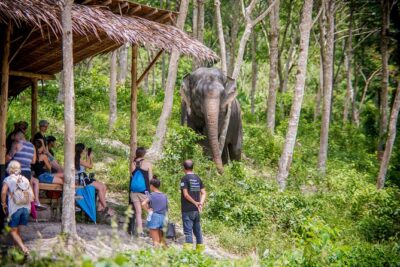
Elephant sanctuaries can be hit or miss, mainly because your behavior and the animals behavior have to match up. Here, the park sets expectations up front: elephants are allowed to walk freely, and visitors are kept at a respectful distance for observation. That alone changes the mood, because you are not rushing from a show moment to the next photo op.
What I also like is how clearly the experience avoids the stress triggers that often come with more interactive formats. Elephant riding and bathing are not offered, and the park says safety and sanitization are first priorities. You will still get close enough to feel the presence of these animals, especially during feeding, but it is done with barriers and staff oversight.
On top of the elephants, the tour adds genuine Thai rhythm. You get demonstrations connected to local life, including rubber tapping and Thai food making. It is a smart pairing because you are in Thailand, not just watching an animal and leaving.
The 1.5 hour flow: observation, history, and fenced feeding
This mini tour is guided, and it moves at a pace that works for most people. The core sequence is simple: you observe elephants from a distance, you learn about their history and habits, and then you transition into a safe feeding area. The park emphasizes instructions from the guide and mahouts, so everyone knows where to stand and what to do.
During the observation part, the goal is natural behavior, not performance. You are not supposed to create commotion. You will learn about elephant routines and habits, and the guides keep things practical so you understand what you are seeing rather than just staring.
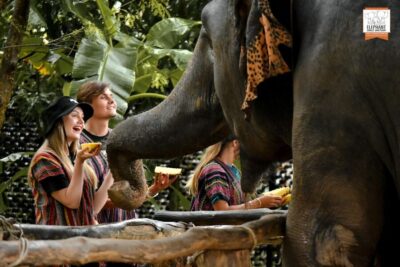
Then comes feeding, and it is handled in a way that keeps you from becoming part of the elephants day in an unsafe way. Feeding takes place at a safe feeding area with a fence between elephants and visitors. Staff and mahouts stay close to help you feed correctly and safely, which matters if you are holding food and trying to do it right with everyone watching the same rules.
Based on what people commonly report, you may also get moments of extra closeness for photos and gentle contact, like patting from within the safe context. I would not treat that as guaranteed, but the park’s overall setup suggests they are trying to balance respectful distance with meaningful interaction.
Timing options that affect your day
You can choose one of three windows: 09:00 to 11:00, 11:00 to 13:00, or 14:00 to 16:00. Because the tour is about 1.5 hours, picking the time that fits your energy matters. If you are pairing it with beach time, go early to keep the rest of your day flexible.
One practical note: even when plans are good, pickup timing can be tight. Build in a buffer so you do not feel rushed if the vehicle arrives a bit later than expected.
Rubber tapping, coconut milk, and Thai cooking: the cultural half that most people forget
Elephants are the headline, but the tour is designed to teach Thai culture through hands-on style demonstrations. The information you receive includes rubber tapping and rubber sheet making, which is called out as a rare traditional practice. If you have never seen how natural rubber starts as tapping and becomes a sheet, this is the sort of practical knowledge you do not get from a quick souvenir stop.
You also get Thai food cooking sessions, plus making coconut milk. These are not just talk-and-watch moments. The structure is guided, so you can follow along, ask questions, and actually understand steps like how ingredients come together in Thai cooking. It is especially helpful if you have a picky eater in your group, because even a short cooking session can translate into something you can later recognize at street food stalls.
What makes this part valuable is that it connects to daily life in Thailand. Rubber tapping is tied to real work, and coconut milk is tied to real flavor. So instead of leaving only with elephant photos, you can also leave with a few mental maps for what you are tasting and seeing later.
And the park’s “keep it calm” rules support this too. Quiet behavior makes it easier to pay attention during the cultural activities, and it reduces the frantic energy that often shows up in animal attractions.






How the park keeps elephants calm, and how you should behave
The rules here are very specific, and they are worth taking seriously because they are what protect the elephants and make the experience work. The park says there should be no physical or verbal violence toward elephants, and they do not allow behavior that disrupts the animals welfare. You also should expect strict quiet: no loud noises in the park.
Photo rules are also part of the ethics. The park prohibits drones and flash photography. That might sound like an afterthought until you realize it keeps animals from reacting to sudden light or attention. If you want great photos, plan for natural lighting and steady patience rather than relying on flash.
You will likely spend time in outdoor areas, and during rainy season the tour provides boots and umbrellas. That is a small detail, but it can change how comfortably you experience the day. If you are visiting during wet weather, accept the boots and use them. It is safer on slippery ground, and you will feel less distracted.
Finally, remember the biggest rule is not written on a sign. Your job is to reduce noise and keep movement controlled. When you do that, the elephant time feels more natural, and the whole group has a smoother experience.
Price and value at about $45.62: what you get, and what to budget
At $45.62 per person, this is not a bargain price, but it does look like solid value for what is included. You get welcoming coffee and/or tea, plus one bottled water per person. The tour also includes an air-conditioned vehicle, and you have an English and Thai guide.
You are also paying for a small-group format and a park model that does not rely on riding or bathing. Those activities are often how lower-cost elephant experiences compress time into quick, high-volume interactions. Here, the structure is slower, quieter, and more staff-supported, which usually costs more to operate.
What is not included can matter depending on where you start. Tips are not included, and there is an extra transfer charge from certain Phuket beach areas. If you are picked up from Mai Khao, Naiyang, Naiton, or Layan, you may pay 250 THB for an adult and 150 THB for a child. For many visitors, that extra fee decides whether this tour feels like a good deal or just an average one.
Also check what you mean by value. If your goal is elephant riding or bathing, this is simply the wrong fit, even if it is cheaper elsewhere. If your goal is a safe, ethical, guided look at elephants plus Thai culture, the price starts to make sense.
Who should book Mini Elephant Nature, and who might want a different format
This tour fits best if you want a short, guided experience and you care about animal welfare. It is described as most travelers can participate, and the group is kept to a maximum of 30, which suits families and mixed-age groups. It is also a good option if you are traveling with a toddler, because the format is structured and you are watching rather than riding.
There is one family-specific detail to plan around: parents must have baby holders during the tour. If you rely on a stroller and need a lot of gear, you might find the setup more comfortable with the kind of carrier that keeps you mobile. Service animals are allowed, based on the tour info.
Older visitors often like this style because it avoids intense physical activities. The park still requires you to move through outdoor areas and follow guide instructions, but you are not dealing with long climbs or strenuous tasks.
If you are the type of traveler who wants a very interactive elephant program, this may feel more observational than you expect. The park explicitly avoids riding and bathing, so keep your expectations aligned. Think of it as guided time with elephants in a calm sanctuary environment, not a thrill ride.
Practical tips for your best day at Bukit Elephant Park
Pack for calm and weather. Even though boots and umbrellas are provided during rainy season, you still want comfortable shoes and light layers so you can handle shade and sun. Bring a phone strap or small crossbody if you are worried about keeping your hands free for feeding.
Choose your time window based on the rest of your schedule. Morning is often easier for families and people who want the day to feel open afterward. An afternoon slot can work well if you are pairing it with a relaxed beach plan, but again, because the tour is about 1.5 hours, do not overbook right after.
If pickup is offered, confirm it and be ready on time. A late pickup can make you miss the beginning portion. That does not ruin the experience, but it does reduce how much you get out of the elephant observation and intro.
Finally, follow the park rules like they are part of the show. No drones, no flash, and no loud noises. If you keep your energy steady, the animals and your guide will respond with a smoother, more natural flow.
Should you book this tour?
I would book Mini Elephant Nature at Bukit Elephant Park if you want an ethical elephant sanctuary visit that prioritizes animal welfare and still gives you real Thai culture. The fenced feeding setup, the no riding and no bathing approach, and the rubber tapping and coconut milk pieces make it more than a quick photo stop.
Skip it if your main goal is elephant riding or bathing. Also consider the extra transfer fee if you are starting from Mai Khao, Naiyang, Naiton, or Layan, because that can nudge the total cost up.
If you match the vibe, though, this is a strong choice in Phuket: respectful, guided, and short enough to fit into a busy itinerary without turning the day into a stressful sprint.
FAQ
Do they offer elephant riding or bathing?
No. Elephant riding and bathing activities are not offered at this experience.
How long is the tour, and what time slots are available?
The duration is about 1.5 hours. Sessions run from 09:00 to 11:00, 11:00 to 13:00, and 14:00 to 16:00.
What is included in the tour price?
You get coffee and/or tea, one bottled water per person, an air-conditioned vehicle, umbrellas and boots for rainy season, and an English and Thai guide.
Is elephant feeding allowed, and is it safe?
Yes. You can feed elephants in a safe feeding area, and there is a fence between elephants and visitors. Guides, mahouts, and staff stay close to help you feed correctly and safely.
Are there extra transfer fees from certain beaches in Phuket?
Yes. There is an extra charge for transfer from Mai Khao, Naiyang, Naiton, or Layan Beach, listed as 250 THB per adult and 150 THB per child.
What is the cancellation policy?
You can cancel for free up to 24 hours in advance for a full refund. If you cancel less than 24 hours before the start time, the amount paid is not refunded.
More Tour Reviews in Phuket
Ethical Elephant Visits Compared



Continue the comparison around Phuket


Ethical Elephant Encounters, compared.
 ★ 4.8Elephant Jungle Sanctuary Ethical Feeding ExperienceFrom $284,359 reviews
 ★ 4.8Elephant Sanctuary Guided Tour with Hotel TransfersFrom $412,020 reviews
 ★ 5.0A Morning with the Elephants at Phuket Elephant SanctuaryFrom $971,693 reviews
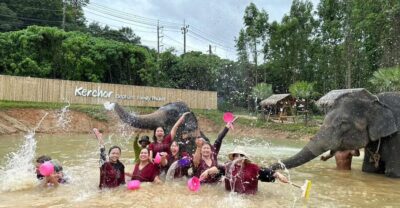 ★ 4.7Elephant Experience with Lunch or Dinner and PickupFrom $671,387 reviews
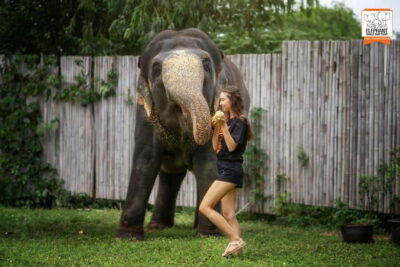 ★ 4.8Elephant Jungle Sanctuary Feed and Shower TripFrom $611,056 reviews
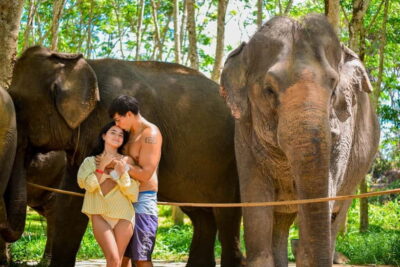 ★ 4.9Beach walk with elephants, rain & care. 2.5 hoursFrom $59969 reviews
 ★ 4.9Bukit Elephant Park Sanctuary Walk and Feed TourFrom $51926 reviews
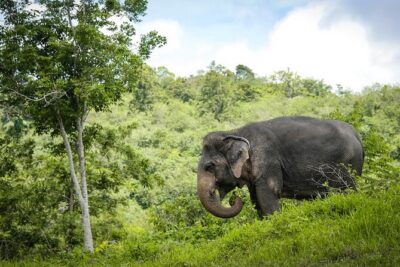 ★ 5.0Phuket Elephant Sanctuary Canopy Walkway TourFrom $61601 reviews
Browse the lists this tour appears in